



Schizophrenia is a complex disorder that can profoundly alter a person’s thoughts, feelings, behavior, and ability to function.1 Schizophrenia relapse can have wide-reaching consequences on patients’ lives, including incarceration or homelessness, social or vocational effects, cognitive decline, or development of treatment resistance.1 For this reason, preventing relapse is a key goal in schizophrenia treatment, and maintaining consistent treatment with antipsychotics is an important part of reaching that goal.2,3 Long-acting injectables (LAIs) release medication gradually so that antipsychotic plasma concentrations stay consistently within therapeutic levels throughout the dosing interval.2,3
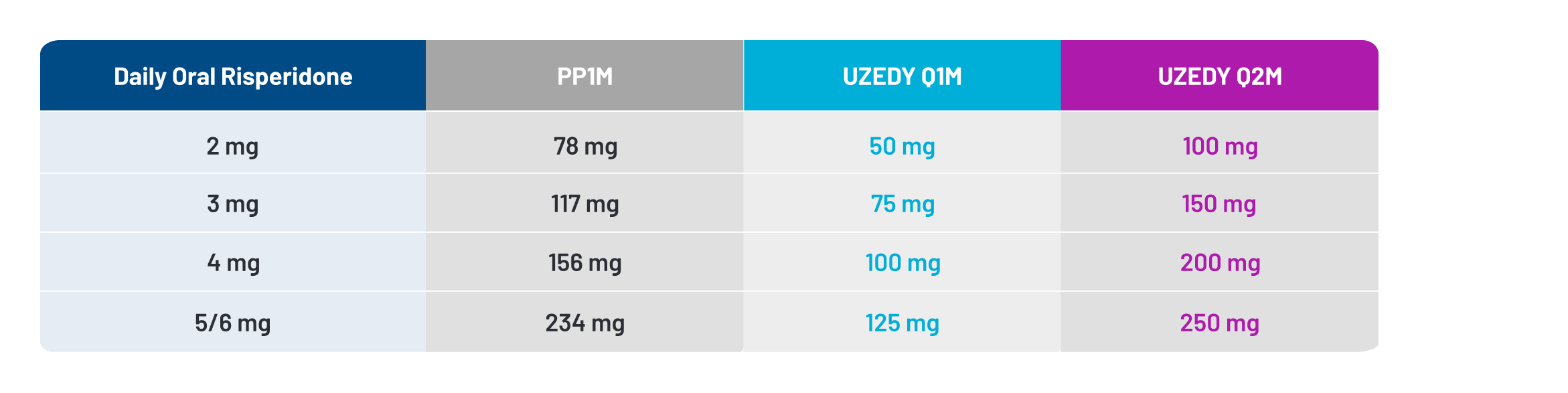
UZEDY is an LAI that utilizes the copolymer drug delivery technology SteadyTeq™ to deliver risperidone over the course of the dosing interval.4 After subcutaneous injection, an initial release of risperidone results in therapeutic plasma concentrations within 6 to 24 hours after injection.4 A depot forms at the site of injection that slowly releases the remaining risperidone over the course of the 1- or 2-month dosing interval (Figure 1).4,5
Figure 1. Plasma Levels of Active Drug With UZEDY
Switching between antipsychotics may be potentially destabilizing if psychotic symptoms or clinically relevant adverse events occur.6 Clinician discretion determines if and when switching is clinically appropriate, based on factors that may include patient preference, scheduling convenience, and concerns about tolerability or symptom breakthrough.6 Switching from other long-acting injectables or molecules besides oral risperidone to UZEDY was not directly studied in clinical trials.
However, once a clinician has determined that it is clinically necessary to switch a patient from another LAI to UZEDY, it is important to consider the pharmacokinetics of other LAIs and UZEDY. To help inform potential dosing conversions and switch strategies, Teva Pharmaceuticals, Inc. conducted population pharmacokinetic (PopPK) modeling to simulate switches from PP1M to UZEDY.7
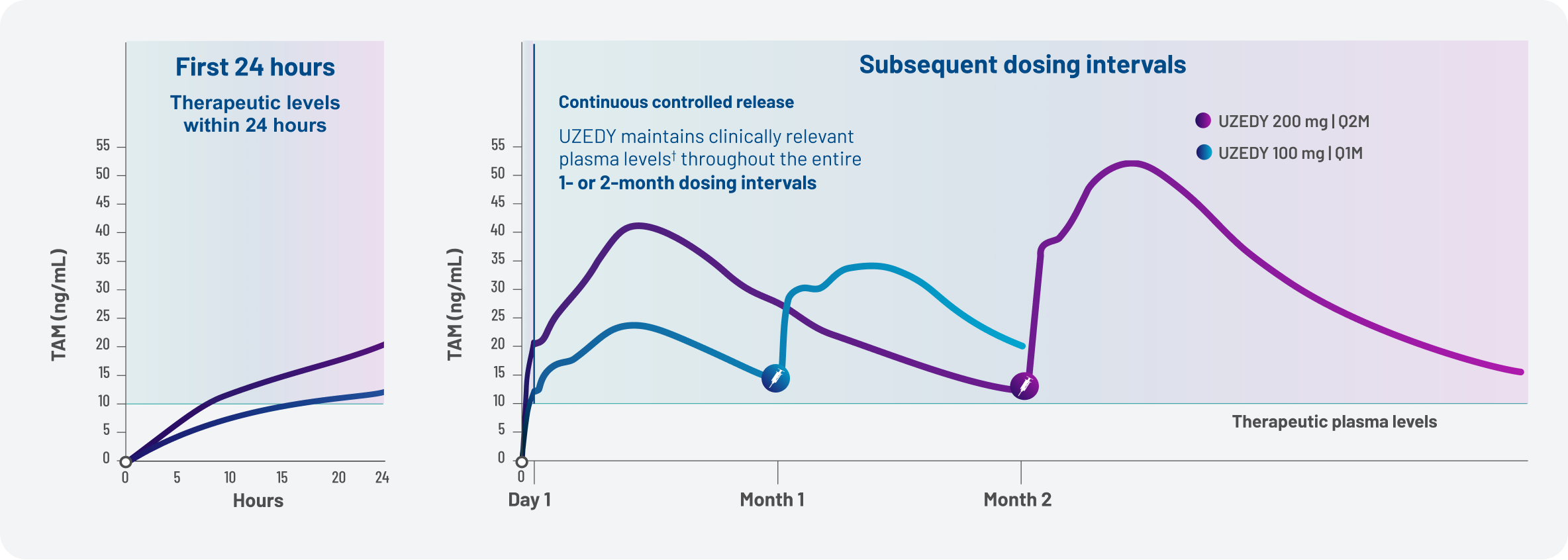
Pharmacokinetically comparable doses of oral risperidone, PP1M, and UZEDY were determined based on PopPK modeling.7 Figure 4 shows the comparable doses of these 3 treatment options. The highest available dose strength of UZEDY is comparable to 5 mg of oral risperidone.8 Note that when a clinician with a patient who has never taken risperidone is considering switching to UZEDY, tolerability should be established with oral risperidone before initiating treatment.8
Figure 4. Comparable Doses of Oral Risperidone, PP1M, and UZEDY
Total active moiety (TAM) concentration-time profiles were simulated using published PopPK models for PP1M and UZEDY, with virtual populations of 5,000 patients. Simulations were performed to predict TAM pharmacokinetic exposures when switching to UZEDY Q1M or Q2M, 4 to 6 weeks at steady state after the last injection of PP1M.7
One switching strategy evaluated was a 1:1 steady-state, comparable-dose switch from PP1M to UZEDY Q1M or Q2M. This example switching simulation assessed patients receiving a 234-mg dose of PP1M who were switching to UZEDY 125 mg Q1M or UZEDY 250 mg Q2M. Based on the TAM concentration simulation, it was determined that patients switching to UZEDY in this scenario should be initiated 4 weeks after the last PP1M dose.7 These switching simulation data are a tool for clinicians to use when planning to switch a patient from PP1M to UZEDY, and can be used to help determine what is appropriate for an individual patient.
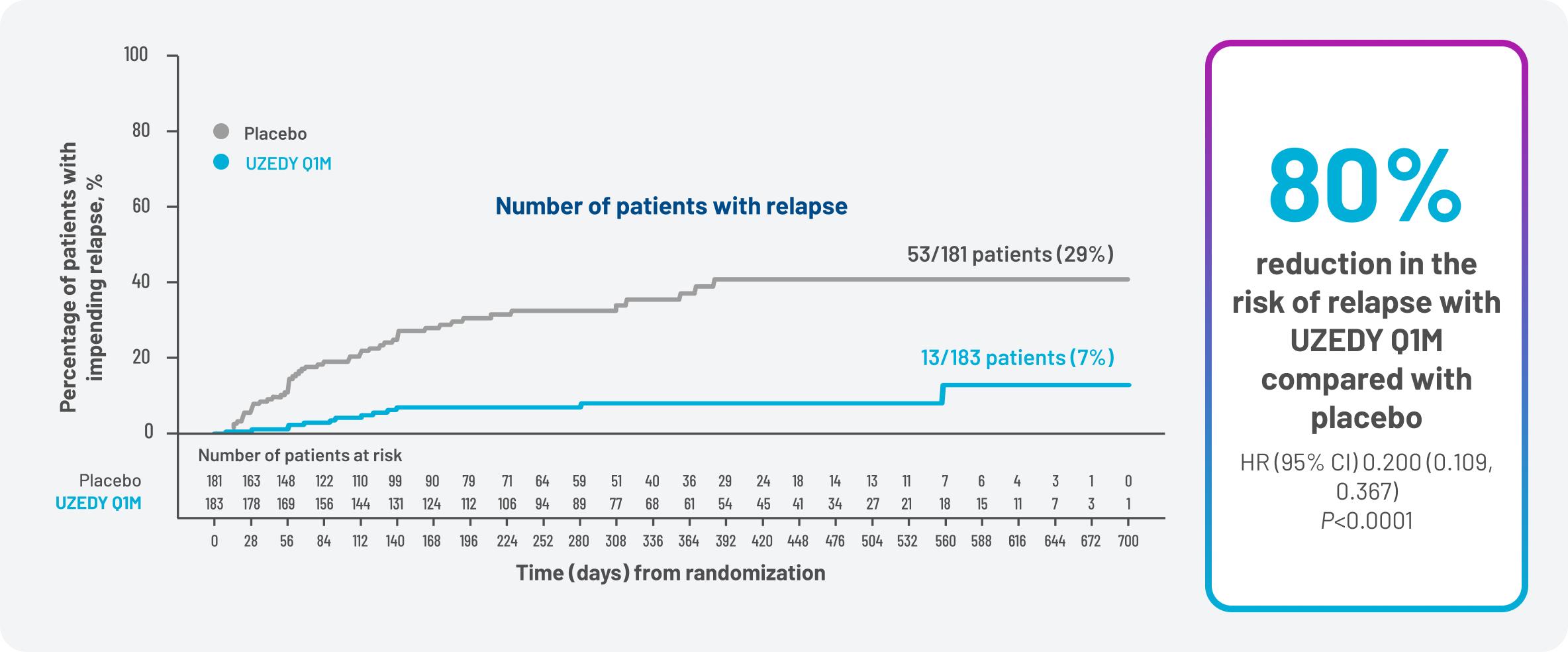
In the RISE clinical trial, patients treated with UZEDY demonstrated a significant reduction in risk of relapse when compared with patients treated with placebo.9 UZEDY once monthly (Q1M) significantly reduced the risk of relapse by 80% compared with placebo, and UZEDY once every 2 months (Q2M) significantly reduced the risk of relapse by 62.5% compared with placebo (Figure 2).9
Figure 2. Significant Reduction in Risk of Relapse
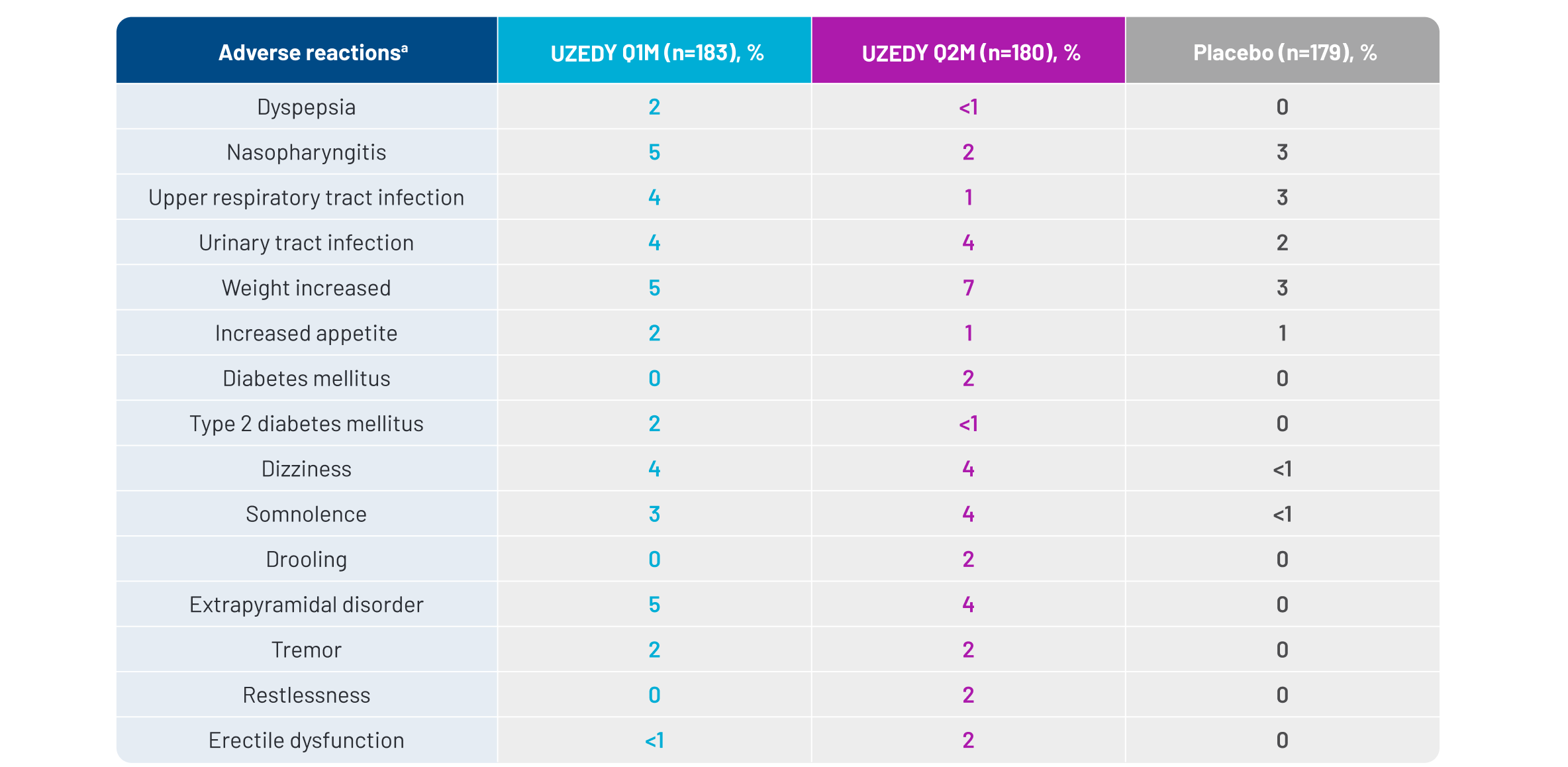
The safety of UZEDY was also evaluated in the RISE clinical trial.9 Figure 3 shows all adverse reactions that occurred in ≥2% of patients with schizophrenia in any treatment arm of UZEDY during the double-blind relapse prevention stage of the RISE trial.10
Figure 3. Adverse Reactions Occurring in ≥2% of Patients in RISE
The most common adverse reactions with risperidone (≥5% and greater than placebo) were parkinsonism, akathisia, dystonia, tremor, sedation, dizziness, anxiety, blurred vision, nausea, vomiting, upper abdominal pain, stomach discomfort, dyspepsia, diarrhea, salivary hypersecretion, constipation, dry mouth, increased appetite, increased weight, fatigue, rash, nasal congestion, upper respiratory tract infection, nasopharyngitis, and pharyngolaryngeal pain.8
The most common injection site reactions with UZEDY (≥5% and greater than placebo) were pruritus and nodule. The systemic safety profile for UZEDY was consistent with the known safety profile of risperidone.8
UZEDY utilizes SteadyTeq™ technology to deliver risperidone, enabling rapid attainment of clinically relevant plasma levels that are maintained throughout a once-monthly or once-every-two-months dosing regimen.5 In the RISE study, UZEDY demonstrated a significant reduction in relapse risk compared to placebo, and the safety of UZEDY was evaluated.9 Additionally, PopPK modeling was employed to simulate the transition of patients from PP1M to UZEDY, providing clinicians with insights to determine how to initiate this switch in treatment.7
- Nasrallah HA. 10 devastating consequences of psychotic relapses. Curr Psychiatry. 2021;20(5):9-12.
- American Psychiatric Association. The American Psychiatric Association Practice Guideline for the Treatment of Patients With Schizophrenia. 3rd ed. American Psychiatric Association; 2021.
- Blackwood C, Sanga P, Nuamah I, et al. Patients’ preference for long-acting injectable versus oral antipsychotics in schizophrenia: results from the patient-reported medication preference questionnaire. Patient Prefer Adherence. 2020;14:1093-1102.
- Perlstein I, Merenlender Wagner A, Gomeni R, et al. Population pharmacokinetic modeling and simulation of TV-46000: a long-acting injectable formulation of risperidone. Clin Pharmacol Drug Dev. 2022;11(7):865-877.
- Merenlender Wagner A, Elgart A, Perlstein I, et al. Phase 1 open-label study assessing the pharmacokinetics and safety of TV-46000, a novel long-acting subcutaneous injectable formulation of risperidone. Presented at: European Congress of Neuropathology; October 2-5, 2021; Lisbon, Portugal. Poster P.0463.
- Højlund M, Correll CU. Switching to long-acting injectable antipsychotics: pharmacological considerations and practical approaches. Expert Opin Pharmacother. 2023;24(13):1463-1489.
- Perlstein I, Meyer J, Yue Z, et al. Switching patients with schizophrenia from intramuscular paliperidone palmitate once monthly to TV‑46000, a long‑acting subcutaneous antipsychotic: population pharmacokinetic–based strategies. Adv Ther. 2025;42(11):5564-5577.
- UZEDY® (risperidone) extended-release injectable suspension Current Prescribing Information. Parsippany, NJ: Teva Neuroscience, Inc.
- Kane JM, Harary E, Eshet R, et al. Efficacy and safety of TV-46000, a long-acting, subcutaneous, injectable formulation of risperidone, for schizophrenia: a randomised clinical trial in the USA and Bulgaria. Lancet Psychiatry. 2023;10(12):934-943.
- Data on file [CSR]. Parsippany, NJ: Teva Neuroscience, Inc.